

King Francis I (1494–1547, reigned from 1515) played a significant role in the history of Renaissance knightly armor. He was a prominent example of the "knight-king"—he personally participated in battles (for example, at the Battle of Pavia in 1525, where he was captured), patronized the arts, and actively commissioned luxurious armor as a symbol of power, prestige, and the chivalric ideal.
Political and Cultural Context.
François I reigned during the Italian Wars (1494–1559)—a period of rivalry with the Habsburgs (Emperor Charles V). Armor became an important tool of diplomacy and propaganda: it demonstrated France's wealth, power, and cultural superiority. The king invited Italian and German craftsmen, contributing to the flourishing of French royal armories in Paris, Tours, and Lyon.
The famous armor of Francis I.
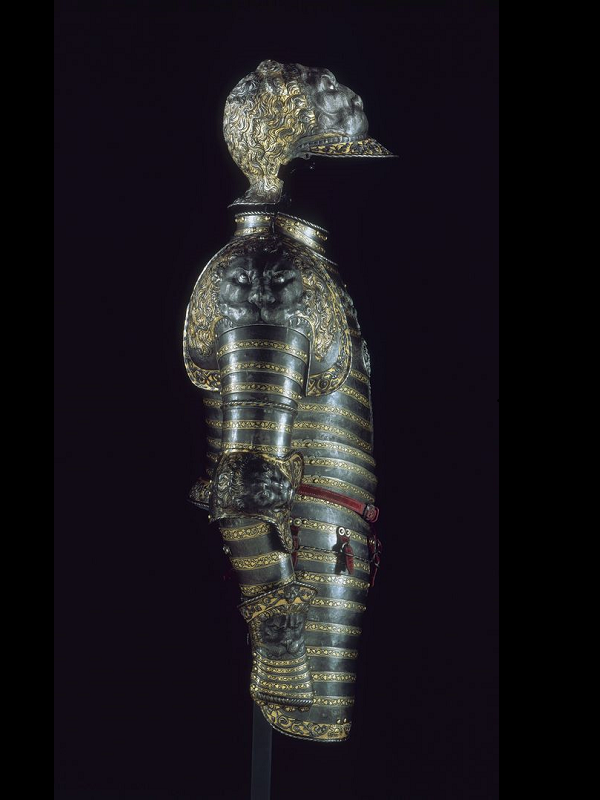
The most famous set is the "Lion Armor" (Armure aux lions, G-50), circa 1540–1545, housed in the Musée de l'Armée (Paris).
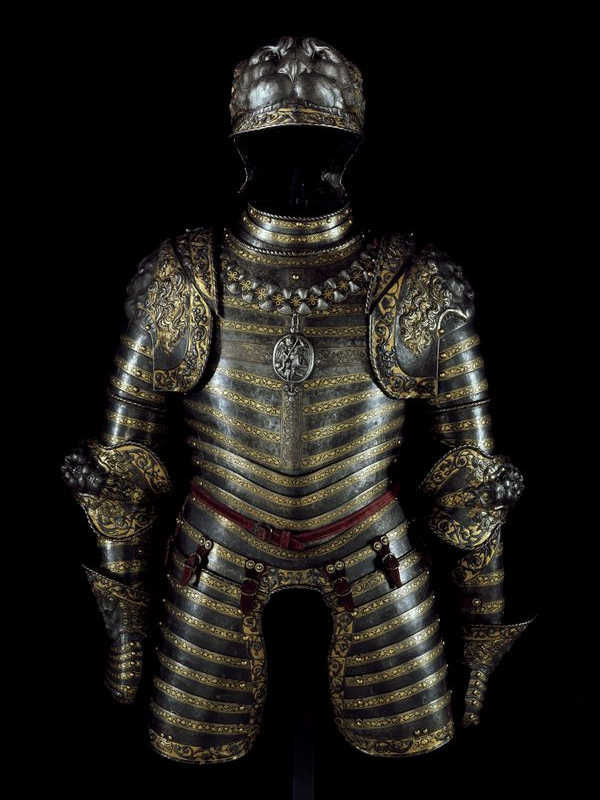
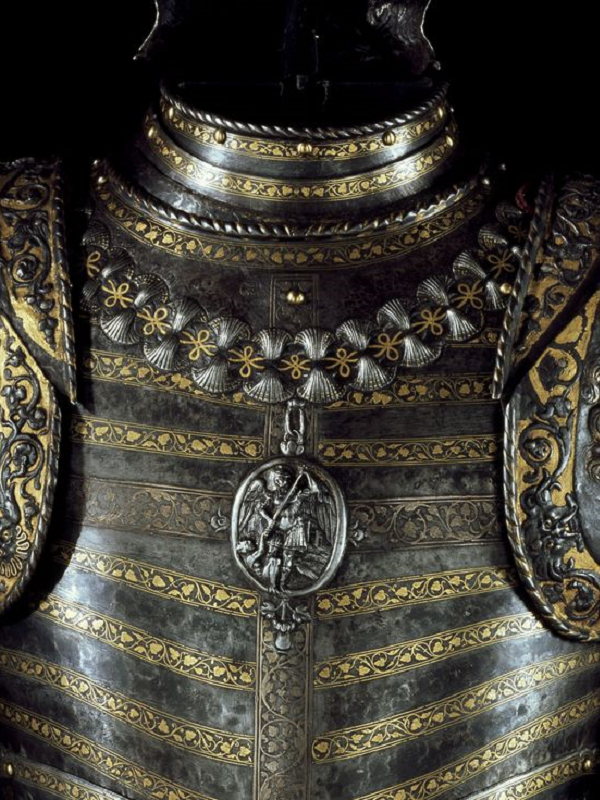
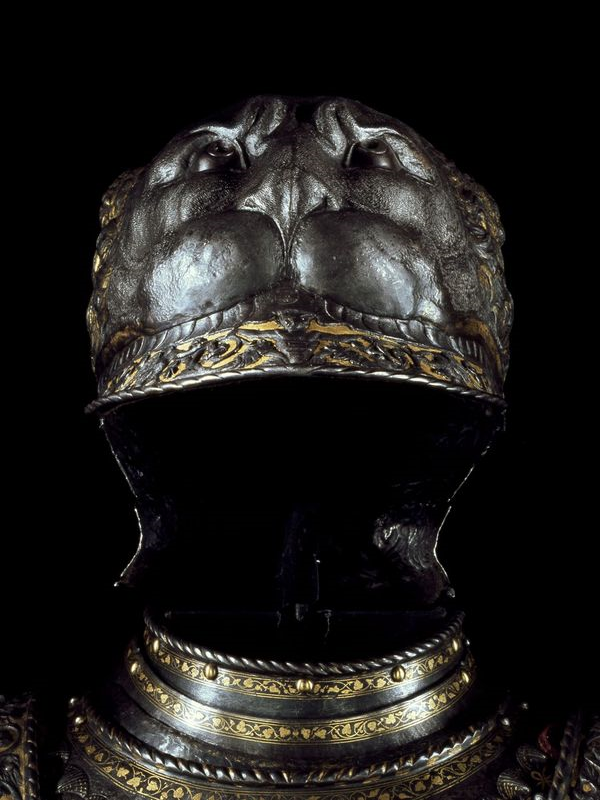
Artist: Attributed to Milanese master Giovanni Paolo Negroli, one of the finest Renaissance armorers.
Style: "Grande maniera" (grand style) – inspired by ancient heroes. Extensive embossing (relief carving) with lion motifs (on the helmet, shoulder pads, elbow pads, and gloves) symbolizes strength, courage, and royal authority.
Features: The king's tall stature (approximately 198 cm) necessitated generous proportions. Ceremonial armor (not fully combat): without visor or greaves, with rich gilding, silver inlay (damasquiné), and mythological motifs. On the chest is the Archangel Michael vanquishing a demon.
Symbolism: The lions emphasized the king's image as the "lion of Europe."
Francis also commissioned armor from German craftsmen (for example, the Seusenhofer dynasty of Augsburg). One set from 1539–1540 was prepared as a diplomatic gift from Charles V, but was not delivered due to the resumption of war.
Contribution to the development of armormaking.
Patronage: Francis I promoted the transition from the late Gothic to the Renaissance style, with an emphasis on aesthetics, classical motifs, engraving, and gilding. Armor increasingly became a work of art, not just protection. Workshops: Under his reign, the influence of Italian (Milan) and German traditions on French armour increased. This laid the foundation for its flourishing under his son, Henry II.
Personal Image: The Knight King, tall and athletic in his youth, used armour for tournaments, parades, and the battlefield, maintaining the chivalric spirit in an era when firearms were already beginning to transform warfare.
Legacy.
The armour of Francis I is a striking example of Renaissance luxury. The finest examples can be seen today in the Musée de l'Armée (Paris), The Metropolitan Museum (New York), and other collections. They illustrate how 16th-century monarchs used armaments to assert their status in competitive European politics.
Unlike Henry VIII, who established a centralized Greenwich workshop, Francis I relied more on imports and court Italian artisans, but his reign marked an important stage in the development of the French armoury tradition.